
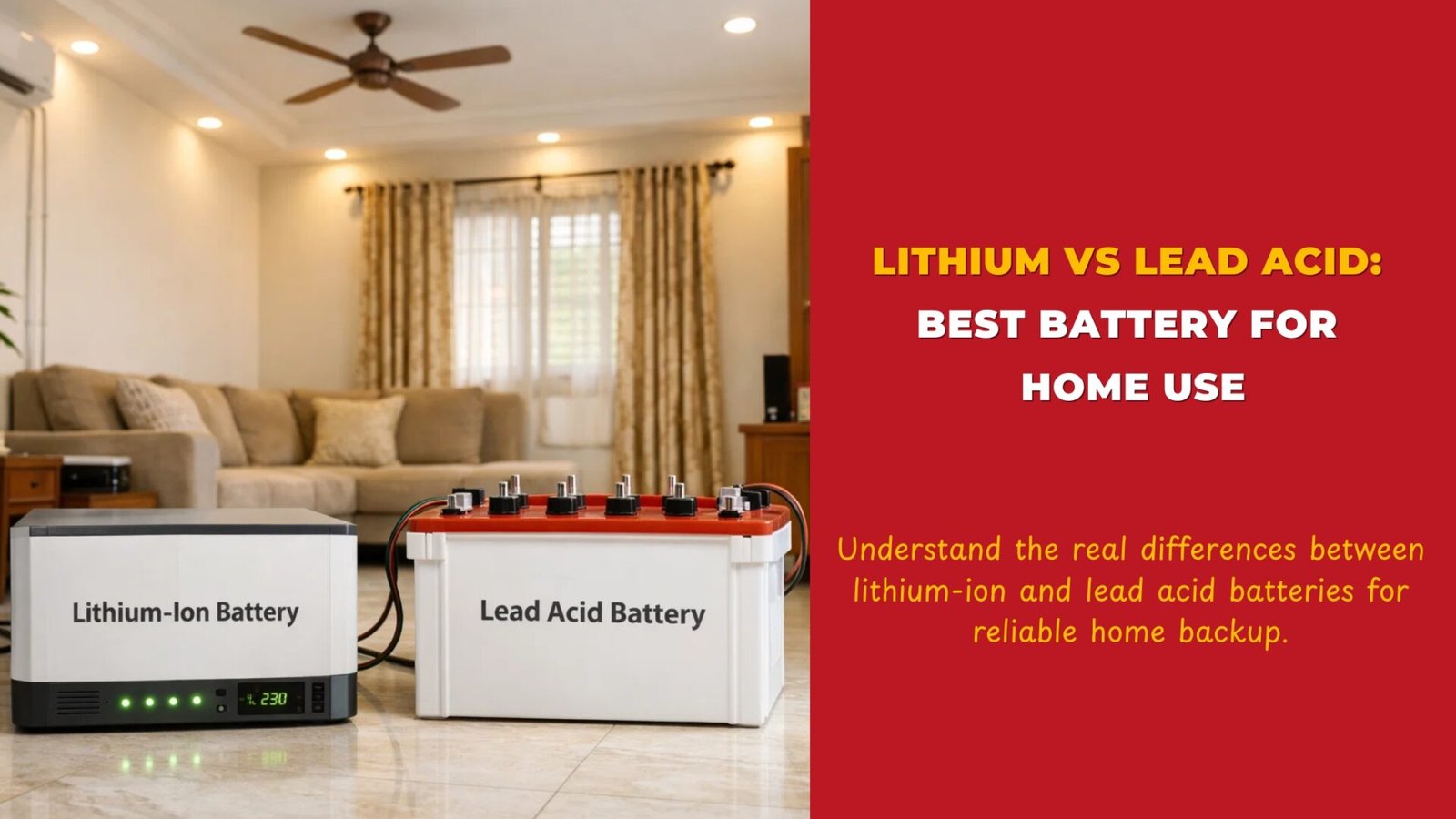
1. Choosing the Right Battery Starts Here
Power outages remain a common issue in many parts of India, especially during peak summer or monsoon seasons. Whether you live in a city or a rural area, having a reliable home backup system is essential for uninterrupted lighting, fan operation, and running essential appliances.
Choosing the right inverter battery is key to ensuring consistent backup, a longer lifespan, and better value for money. Today, two major types dominate the home battery market: Lithium-Ion and Lead Acid.
In this blog, we’ll compare Lithium vs Lead Acid batteries and help you decide which one is best for your home use.
🔋 2. Overview of Battery Types
Both battery types serve the same purpose—power backup—but differ greatly in performance, maintenance, and lifespan. Understanding these differences can help you make a smarter choice.
| Battery Type | Description |
|---|---|
| Lithium-Ion Battery | Uses lithium cells to store and release energy. Common in modern gadgets, and increasingly used in home backup systems and solar setups due to their compact size, fast charging, and long lifespan. |
| Lead-Acid Battery | Traditional choice for inverters. Available in two types: Flat Plate: Suitable for short-duration backup Tubular: Better for long-duration and frequent power cuts. Known for affordability and wide availability. They’ve been the go-to battery for decades due to affordability and availability. |
They’ve been the go-to battery for decades due to affordability and availability.
⚙️ 3. Key Comparison Factors
| Feature | Lithium-Ion Battery | Lead Acid Battery |
|---|---|---|
| Backup Duration | High (up to 90% usable capacity) | Moderate (50–60% usable capacity) |
| Charging Time | Fast (2–3 hours) | Slow (6–8 hours) |
| Lifespan | 2000–3000 charge cycles | 500–1000 charge cycles |
| Maintenance | Zero maintenance | Requires regular water topping & cleaning |
| Safety | Safer with BMS & overcharge protection | Risk of leakage and overheating |
| Cost & Value | Higher upfront, long-term savings | Lower cost, frequent replacements |
⚡ 4. Which Battery Is Better for Home Backup?
✅ Choose Lithium-Ion if:
- You use solar panels or plan to upgrade
- You want hassle-free maintenance
- You need backup for frequent power outages
✅ Choose Lead Acid if:
- You have a limited budget
- Your power needs are basic (lights, fans, router)
- You are okay with routine maintenance
💡 5. Expert Tip: Match Battery Type with Your Usage
- Solar Users: Lithium is ideal due to its fast charging and deep discharge compatibility
- High Load Homes: Use lithium for ACs, fridges, and long outages
- Basic Backup Needs: Lead acid is sufficient for lights, fans, and TV
Also, check your inverter’s compatibility—some models work only with specific battery types.
6. Final Recommendation: Which Battery Should You Choose?
If you’re on a tight budget and need basic power backup for lights and fans, a tubular lead-acid battery is a cost-effective choice—just be ready for regular maintenance.
For city homes with frequent outages, lithium-ion batteries are ideal due to their fast charging and low maintenance.
If you have a solar-powered setup, lithium-ion is the best match thanks to its deep discharge capacity and efficiency with solar systems.
And if you’re looking for long-term value, lithium-ion batteries offer better ROI with longer life and hassle-free use, making them a smart investment despite the higher upfront cost.
Top Brands Available:
- Lithium: Luminous Li-ON, Livguard Li-Ion, Exide Powersafe+
- Lead Acid: Exide, Amaron, Luminous, Microtek
📞 7. Why Choose Vaibhav Enterprises for Battery Needs?
Choosing the right battery goes beyond price and brand—it depends on understanding your actual power usage, backup requirements, and long-term reliability. Vaibhav Enterprises focuses on helping customers make informed decisions by offering practical guidance based on real household and vehicle power needs. With access to a wide range of lithium-ion and lead-acid batteries, the focus remains on recommending solutions that balance performance, durability, and value. Whether you are planning a new inverter setup, upgrading an existing system, or replacing an old battery, the right selection can make a noticeable difference in backup efficiency and maintenance. If you need help selecting the right inverter or battery based on your usage, contact us for reliable power backup solutions.
Read More:- Why Investing in a UPS Battery is Essential for Equipment Protection