
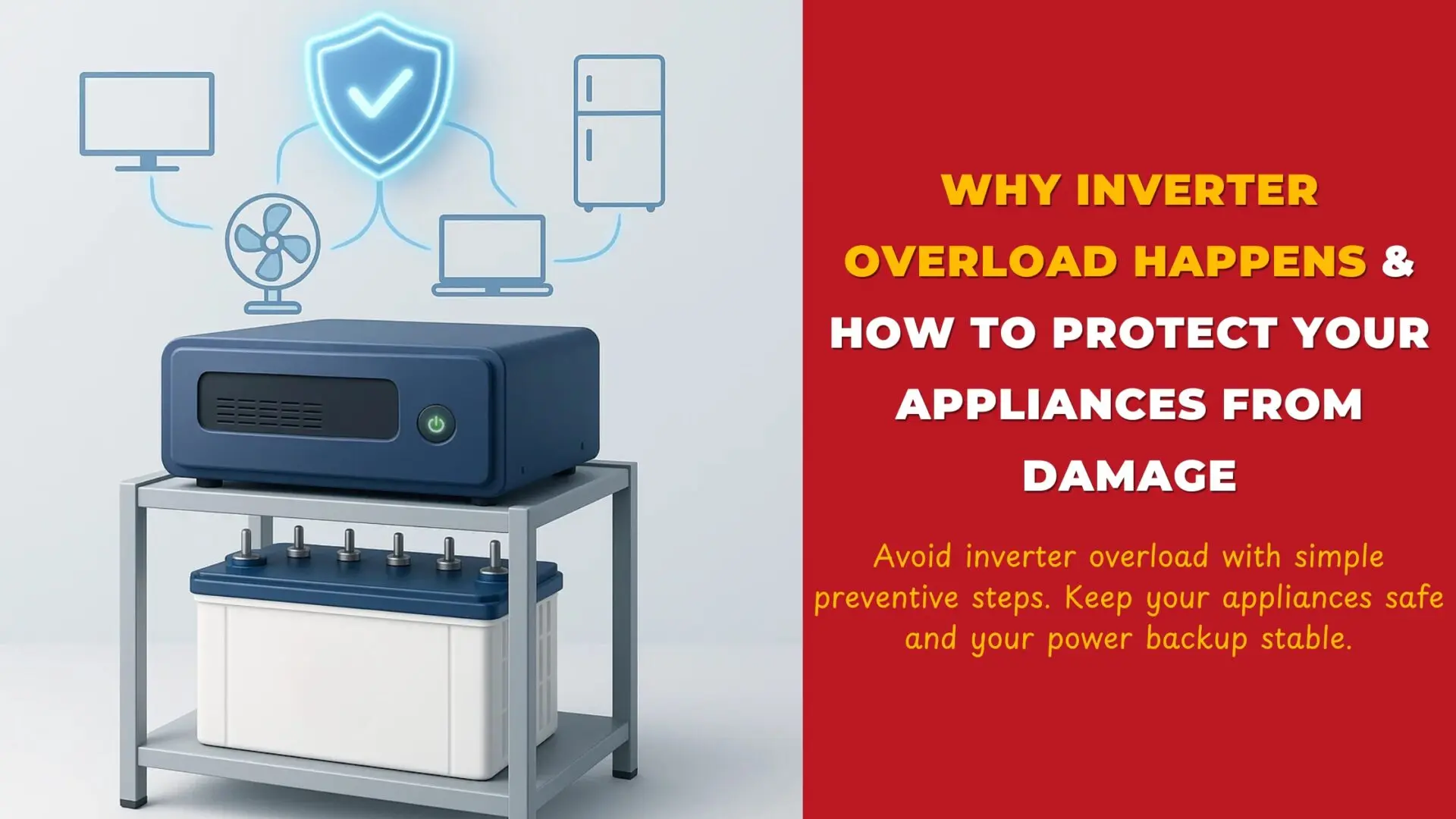
Introduction – Why Inverter Overload Is a Common Yet Dangerous Problem
In many homes and shops, inverters have become a basic need due to frequent power cuts. Fans, lights, TVs, refrigerators, and computers are often connected to inverter systems to keep daily life running smoothly. But when an inverter is forced to handle more load than it can manage, inverter overload occurs.
Most people do not realise they are facing an inverter overload problem until their appliances suddenly stop working, the inverter keeps tripping, or batteries fail much earlier than expected. Overload not only affects your power backup but also puts your costly appliances at risk.
Understanding inverter safety and learning how to protect appliances from inverter damage is important for every user. This guide explains why overload happens, how it harms your devices, and the simple steps you can take to avoid power backup problems before they become expensive mistakes.
1.What Is Inverter Overload? (In Simple Terms)
Inverter overload happens when the total power demand from connected appliances becomes more than what the inverter can safely supply. Every inverter has a fixed limit. Once you cross that limit, the system struggles.
Think of it like filling a bucket with water. If you keep pouring after the bucket is full, water spills out. In the same way, when you connect too many appliances, the inverter reacts by shutting down, tripping frequently, or delivering unstable power.
This situation is especially harmful when it happens regularly. Over time, it weakens the inverter, damages batteries, and risks appliance damage during power cuts.
2. Why Does Inverter Overload Happen?
There is no single reason for inverter overload. It usually happens due to daily usage habits and poor system planning.
Running Too Many Appliances at Once
This is the most common cause. When lights, fans, TV, refrigerator, microwave, and washing machine are run together on inverter power, the load adds up quickly.
Many people connect everything without realising that the inverter has a load limit. When usage crosses that limit, the system becomes unstable.
Wrong Load Calculation
One major reason people face inverter tripping issues is not knowing how much load their inverter can handle.
People usually install inverters based on guesswork rather than proper electrical load calculation. Without knowing the total watt usage of appliances, overloading becomes unavoidable.
Low Battery Capacity
Batteries are the heart of the power backup system. If battery storage is too small, it cannot support heavy load even for short durations.
As a result:
• Battery drains faster
• Inverter shuts down early
• Power delivery becomes unstable
Weak batteries increase overload risk significantly.
Faulty Wiring
Old or loose wiring causes uneven current flow. This puts extra strain on the inverter and increases overload chances.
In shops and old houses, worn cables and improper joint connections are common reasons for electrical problems.
Aged or Weak Batteries
As batteries get older, their ability to support heavy loads decreases.
Even if your inverter is strong, weak batteries cannot supply required energy. This results in:
• Sudden shutdown
• System overheating
• Reduced output efficiency
Old batteries are silent contributors to repeated overloads.
3. How Inverter Overload Damages Your Home Appliances
Overload does not happen quietly. It sends harmful voltage and stress through your appliances.
Common problems caused by overload include:
• Sudden device shutdown
• Internal circuit damage
• Motor failure in fans and refrigerators
• Display malfunction in TVs and computers
• Battery charging issues
• Reduced appliance life
Sensitive electronics are most affected. Frequent power swings slowly damage internal components, which is why many appliances fail unexpectedly after repeated overload.
4. Common Warning Signs of Inverter Overload
Watch for these warning signs:
Frequent inverter shutdown
Burning smell
Low backup time
Flickering lights
Loud inverter fan sound
Battery heating up
Inverter restart loops
Ignoring these signs can convert small issues into permanent damage.
5. How to Protect Your Appliances from Inverter Overload
You do not need expert knowledge to prevent overload. You need awareness and planning.
Load Planning: The Most Important Step to Prevent Overload
Always list the appliances you plan to run on backup.
Estimate the total load.
Disconnect heavy appliances.
Avoid unnecessary devices.
Do not let all rooms run on inverter if the unit is small.
Choosing the Right Inverter & Battery Combination
An inverter must match both the load and the battery.
Select:
• Inverter capacity based on usage
• Battery size based on backup hours
• Equipment compatibility
Never under-size your power backup setup.
Why Installing Safety Devices Matters
Safety devices act as protection shields for your system.
Install:
• Surge protectors
• MCBs
• Fuse protection
• Earthing system
These instantly disconnect power during overload and protect appliances.
6. Common Mistakes People Make That Lead to Inverter Overload
Avoid these mistakes:
Connecting AC or heater
Overusing refrigerator on battery
Ignoring battery health
Skipping maintenance
No safety devices
Poor wiring setup
Wrong inverter size
Switching to backup manually too late
Each mistake adds risk.
7. What to Do Immediately If Inverter Overload Happens
If overload happens:
- Switch off heavy appliances
- Check wiring condition
- Feel battery temperature
- Let inverter cool
- Reset system
- Reduce load
- Monitor performance
Do not ignore repeated shutdown.
8. Final Safety Checklist for Homeowners
Use this quick list:
✅ Calculate power usage
✅ Reduce unnecessary load
✅ Check battery health
✅ Inspect wiring annually
✅ Use safety equipment
✅ Maintain ventilation
✅ Replace old batteries
✅ Monitor inverter sound
✅ Disconnect heavy appliances
✅ Do not ignore warning signs
Conclusion
Inverter overload is not a technical fault alone. It is a planning problem.
Every inverter failure teaches the same lesson: system stress leads to damage.
Protect your power backup before it fails. Protect your appliances before they burn.
Safe electricity is smarter electricity.
A well-planned power backup system plays a key role in protecting both appliances and daily comfort during power cuts. Proper guidance helps ensure long-term safety and reliable performance.
🔌 Ready to Protect Your Appliances with a Safer Power Backup System?
Don’t wait for overload issues to damage your inverter or home appliances. At Vaibhav enterprises, you get the right inverter–battery solutions designed for your exact power needs.
✅ Expert load calculation
✅ Genuine branded batteries & inverters
✅ Reliable installation and support
Choose smarter, safer electricity today.