
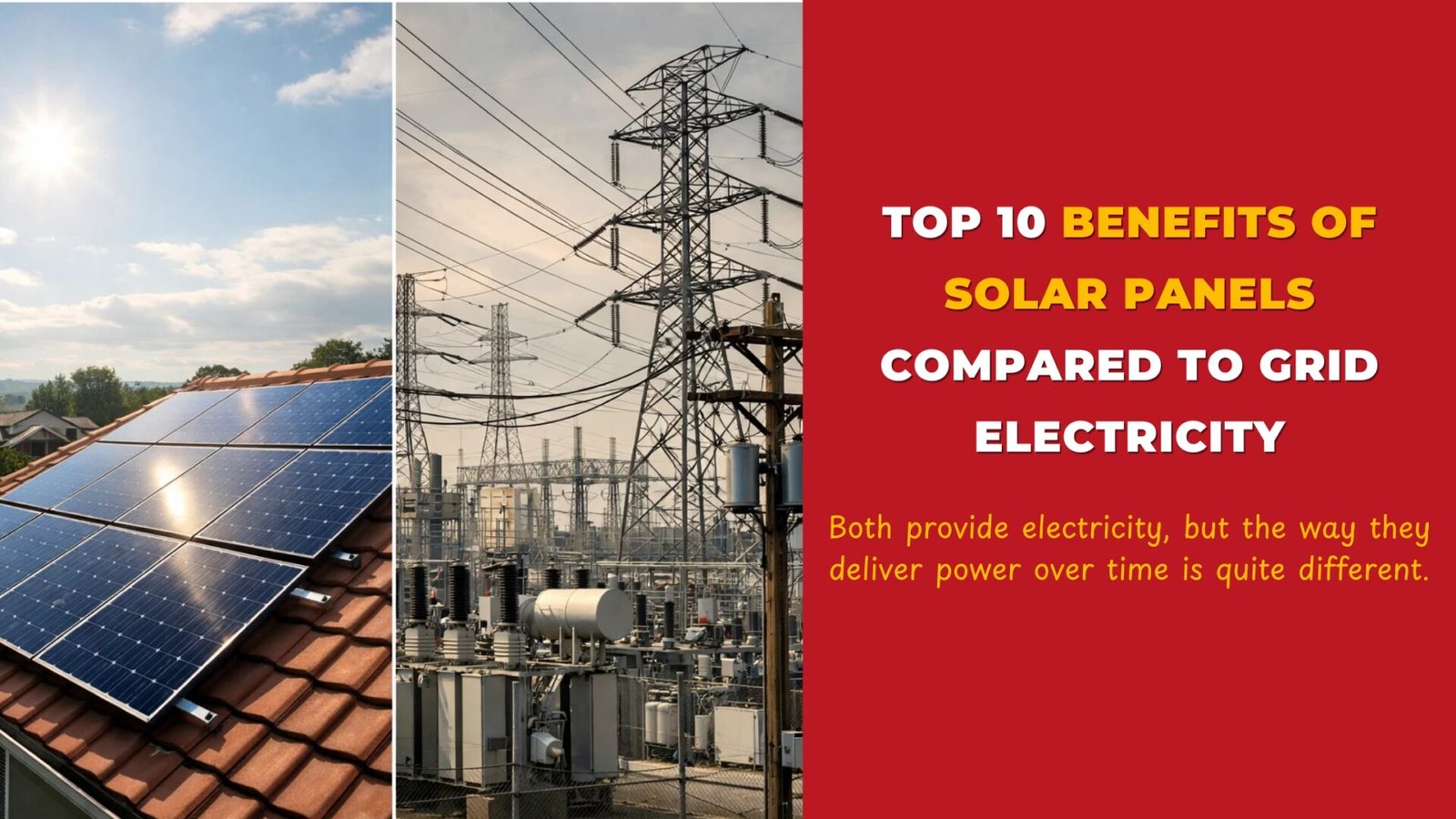
Over the last decade, the way people think about electricity has started to change. Rising power bills, frequent outages in some areas, and growing environmental awareness have pushed many homeowners and businesses to explore alternatives to conventional power sources. Among these options, solar energy has emerged as a practical and increasingly accessible solution.
Grid electricity remains the most common source of power in homes and offices. It is familiar, widely available, and easy to use. However, it also comes with certain limitations—such as fluctuating tariffs, dependence on central supply, and vulnerability to outages. Solar panels, on the other hand, generate electricity directly from sunlight and offer a different approach to meeting everyday energy needs.
This blog presents a clear and balanced comparison by explaining the benefits of solar panels when viewed alongside grid electricity. The goal is not to replace one with the other in theory, but to help beginners understand why solar power is increasingly being considered a strong alternative or support system.
Key Benefits of Solar Panels When Compared with Grid Electricity
1. Lower Long-Term Power Costs
Grid electricity may appear affordable on a monthly basis, but over time, the cumulative cost can be significant. Every unit consumed adds to the bill, and there is no ownership or long-term return on that spending.
Solar panels work differently. Once installed, they generate electricity for many years using sunlight, which is freely available. While there is an initial setup cost, the ongoing expense of producing power is minimal. Over time, households often find that their dependence on paid electricity reduces, leading to noticeable long-term savings. This shift from recurring payments to self-generated power is one of the strongest solar energy benefits.
2. Reduced Dependence on Grid Power Availability
Grid electricity depends on a centralized network of generation plants, transmission lines, and substations. Any disruption in this chain—maintenance, faults, or weather-related issues—can affect supply.
Solar panels generate power at the point of use. This localized generation reduces reliance on external infrastructure. Even when grid supply is inconsistent, solar-powered homes can continue to produce electricity during daylight hours. This reduced dependence offers greater energy confidence, especially in areas where supply interruptions are common.
3. Protection from Rising Electricity Tariffs
One of the biggest uncertainties with grid electricity is tariff revision. Electricity rates often increase due to fuel costs, infrastructure upgrades, or policy changes. Consumers have little control over these increases.
Solar panels help shield users from such fluctuations. Since sunlight does not have a market price, the cost of solar-generated electricity remains stable over time. Once a system is in place, users are less affected by future tariff hikes, making solar power a more predictable energy option for long-term planning.
4. Renewable and Sustainable Energy Source
Grid electricity is still largely generated from fossil fuels in many regions. These resources are finite and contribute to environmental degradation over time.
Solar power comes from a renewable source—the sun—which is naturally replenished every day. Using solar panels supports long-term sustainability without depleting natural reserves. This makes solar energy a forward-looking option for individuals who want their energy choices to align with environmental responsibility.
5. Reliable Power During Outages (With Batteries)
A common limitation of grid electricity is its vulnerability to outages caused by storms, technical failures, or load management. These interruptions can disrupt daily routines and business operations.
Solar panels, when paired with battery storage, can continue supplying power even when the grid goes down. Stored solar energy can be used during outages, ensuring essential appliances keep running. This reliability is particularly valuable for homes with critical power needs or businesses that cannot afford downtime.
6. Minimal Operating and Maintenance Requirements
Grid electricity users do not manage power generation, but they are fully dependent on external systems that require constant maintenance at a large scale.
Solar panel systems are relatively simple in operation. Once installed, they require minimal upkeep—mainly occasional cleaning and basic inspections. There are no moving parts involved in electricity generation, which reduces the likelihood of mechanical failure. This low-maintenance nature makes solar power convenient for long-term use.
7. Long Lifespan of Solar Panel Systems
Grid electricity consumption does not create any lasting asset for the user. Payments made over the years do not result in ownership or long-term value.
Solar panels, by contrast, are durable systems designed to function for decades. Many systems continue producing power efficiently for 20–25 years or more. This long lifespan turns solar panels into a long-term energy asset rather than a recurring expense, offering sustained value over time.
8. Environment-Friendly Power Generation
Electricity from the grid often involves emissions generated during fuel extraction, transportation, and power production. These emissions contribute to air pollution and climate-related concerns.
Solar panels generate electricity without releasing pollutants during operation. By using sunlight directly, they help reduce carbon emissions associated with daily power consumption. This makes solar energy a cleaner option that supports healthier surroundings and contributes to broader environmental goals.
9. Scalable Power Capacity as Needs Increase
Grid electricity supply is fixed in terms of connection capacity, and increasing it may involve administrative procedures or infrastructure upgrades.
Solar power systems are modular. This means additional panels can often be added if energy needs grow—such as when new appliances are installed or a family expands. This scalability allows users to adapt their energy system over time, making solar power more flexible than a standard grid connection.
10. Better Energy Control Compared to Grid Supply
With grid electricity, users consume power without much visibility into how or when it is generated. Control is limited to managing usage, not production.
Solar panels give users greater insight into their energy generation and consumption patterns. Many systems allow monitoring of daily production and usage, helping households make informed decisions about energy use. This sense of control encourages efficient habits and better overall energy management.
Solar Panels and Grid Electricity: A Balanced Perspective
It is important to note that grid electricity continues to play a vital role in meeting large-scale energy demands. It offers convenience and consistent supply in many regions. Solar panels are not always a complete replacement, especially in locations with limited sunlight or space constraints.
However, solar power systems work effectively as an alternative or supporting source. Many users choose to combine solar energy with grid electricity to balance reliability and cost efficiency. This hybrid approach allows households and businesses to enjoy the strengths of both systems while reducing their limitations.
Conclusion
The comparison between solar panels and grid electricity highlights why solar energy is gaining attention as a practical power solution. From lower long-term costs and protection against tariff increases to environmental benefits and improved energy control, the benefits of solar panels address many of the challenges associated with conventional electricity.
Grid electricity remains essential and widely used, but solar power offers an opportunity to reduce dependence, improve reliability, and adopt a more sustainable approach to energy consumption. For beginners exploring renewable options, understanding these advantages helps in making informed decisions.
As energy needs continue to evolve, solar panels are increasingly being considered not just as an alternative, but as a smart addition to traditional power sources—supporting both economic and environmental goals in a balanced, practical way.
If you are considering solar energy as a long-term and reliable power option, learning about the right system is an important next step. Exploring solar panel solutions from Vaibhav Enterprises can help you understand different system types, installation considerations, and practical options that match your energy needs while supporting consistent savings over time.
For personalized guidance or any questions, you can connect to discuss your solar needs and explore suitable options.