
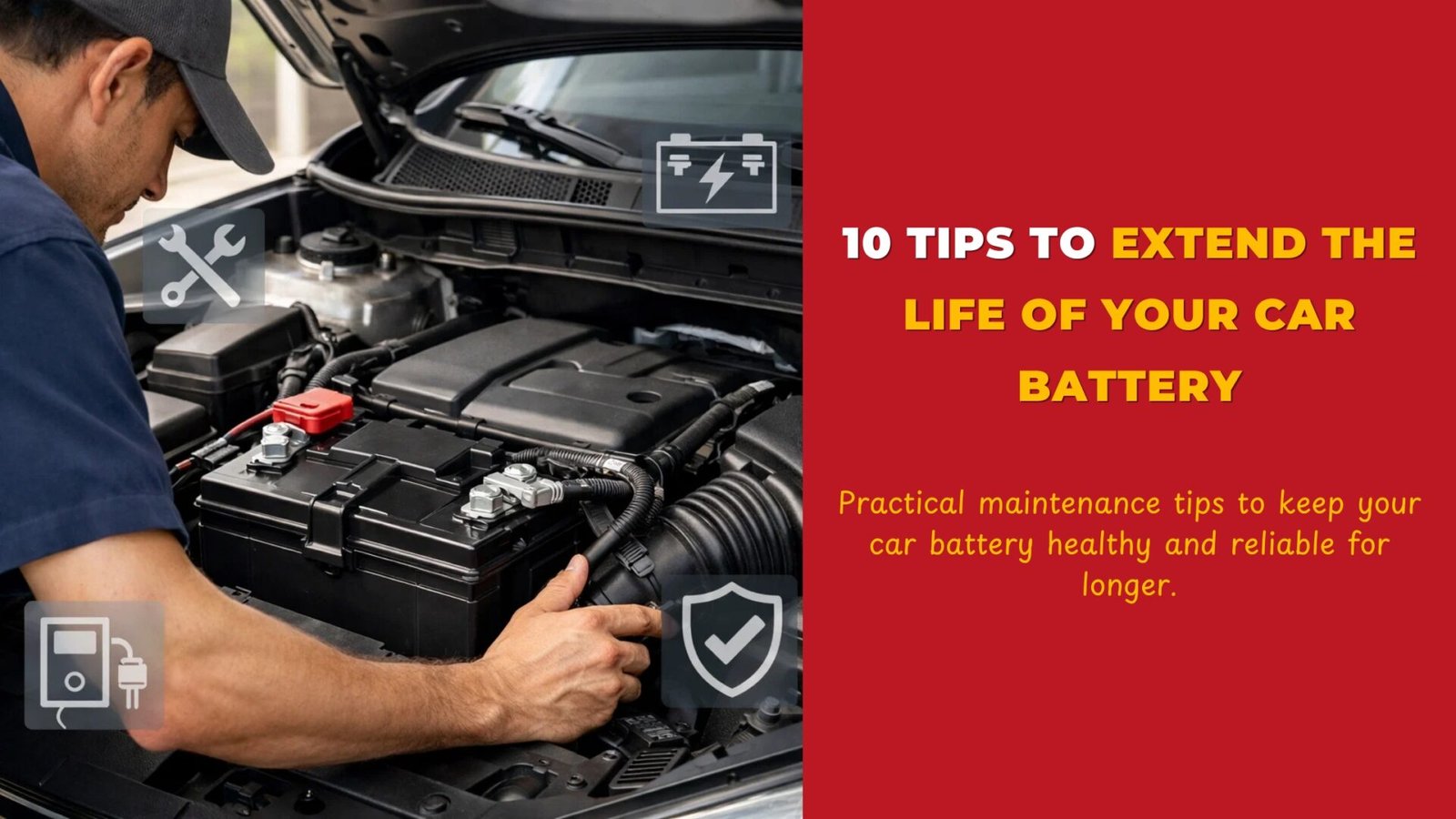
Having a dependable car battery is crucial for an uninterrupted driving experience, as it provides the necessary power to start your engine and run vital electronic systems. A failing battery can leave you stranded and in need of inconvenient roadside assistance. Although a properly maintained battery typically lasts between 3 to 5 years, implementing a few straightforward tips to extend the life of your car battery can significantly prolong its lifespan.
This blog post introduces five practical tips designed to maximize your battery’s longevity, potentially saving you from the hassle and cost of premature replacements. These strategies range from optimizing your driving patterns and minimizing electrical loads to controlling temperature extremes and keeping terminals free of corrosion.
By following these guidelines, you’ll extract the full value from your battery investment, guaranteeing a reliable start and seamless journey every time you get behind the wheel.
10 ways to Extend the Life of Your Car Battery
1. Avoid Short Trips & Prioritize Longer Drives:
Maximizing your battery’s lifespan heavily relies on minimizing short, frequent trips and favoring longer drives when feasible. Brief stop-and-go excursions may not allow sufficient time for the alternator to fully recharge the battery after engine start-up. This recurring cycle of incomplete charges can eventually lead to an undercharged state, compromising the battery’s overall durability.
To mitigate this issue, make an effort to combine errands into extended drives to give the alternator adequate time to replenish the battery’s charge comprehensively. Integrating occasional longer road trips into your routine not only promotes a well-maintained battery but also offers a refreshing change of pace from the repetition of short commutes.
2. Minimize Electrical Drain When Parked:
Limiting electrical drain when your vehicle is parked plays a vital role in extending your battery’s lifespan. Develop the habit of turning off all lights, accessories, and electronic devices before exiting the car. Even something as trivial as an interior dome light left illuminated can gradually deplete the battery’s charge over time.
For some car models, it’s recommended to minimize the usage of electronics such as radios, DVD players, or charging ports while the engine is off, as these can place an additional strain on the battery. By being conscientious about managing electrical loads when parked, you can prevent unnecessary discharge, allowing your battery to retain its full charge and maximize its durability and dependability.
3. Keep Your Battery Clean and Corrosion-Free:
Keeping your battery clean and free from corrosion is paramount for ensuring peak performance and durability. Over time, the terminals can accumulate a crusty buildup that obstructs the flow of electrical current and hinders the battery’s efficiency.
This corrosive buildup not only reduces the battery’s ability to hold a charge but can also accelerate its degradation. Regularly inspect the terminals for any signs of deposit accumulation and clean them using a baking soda and water solution. A stiff-bristled brush can help in removing stubborn deposits.
By maintaining clean and corrosion-free terminals, you can facilitate optimal electrical conductivity, enabling your battery to operate at its full potential and maximizing its lifespan.
4. Manage Temperature Extremes:
Your car battery’s lifespan is highly susceptible to temperature extremes, both scorching heat and bitter cold. Excessive heat can accelerate the internal chemical reactions within the battery, leading to overcharging and potential component damage.
On the other hand, freezing temperatures can temporarily diminish the battery’s charge capacity, making it more challenging to start the engine and potentially causing permanent degradation over time.
To combat these temperature-related threats, strive to park your vehicle in a garage or shaded area whenever possible. This simple step helps regulate the battery’s operating temperature, shielding it from harsh environment extremes.
By managing temperature fluctuations and avoiding prolonged exposure to extreme conditions, you can protect your battery from undue stress and premature aging, ultimately maximizing its reliable service life.
5. Regular Maintenance:
Although many contemporary car batteries are designed to be maintenance-free, certain types still necessitate periodic upkeep to ensure optimal durability. For these batteries, it’s crucial to routinely inspect the fluid levels and replenish them with distilled water as required.
Failure to perform this simple task can result in accelerated deterioration and premature battery failure. Moreover, it’s highly recommended to have your battery inspected by a professional mechanic at regular intervals.
During these inspections, they can evaluate the battery’s condition, clean the terminals if needed, and provide valuable insights regarding its remaining lifespan. By adhering to regular maintenance requirements and leveraging professional expertise, you can identify potential issues early on and take proactive measures to maximize your battery’s service life.
6. Avoid Leaving the Car Unused for Long Periods:
A car battery naturally loses charge over time, especially when the vehicle is not used regularly. If a car remains parked for several days or weeks, the battery may discharge to a level where starting the engine becomes difficult.
To prevent this, it is advisable to start the car at least once a week and allow it to run or drive for a short duration. Regular usage helps keep the battery charged and maintains its overall health.
7. Turn Off Electronics Before Starting the Engine:
Before starting your car, ensure that electrical components such as headlights, air conditioning, music systems, and charging ports are switched off.
Starting the engine already requires a high amount of power from the battery, and additional electrical load can strain it further. Reducing this load during ignition helps protect the battery and contributes to a longer service life.
8. Check Battery Voltage Periodically:
Monitoring your car battery’s voltage from time to time can help detect early signs of weakness. A healthy battery generally shows around 12.6 volts when the engine is turned off.
If the voltage consistently falls below this level, it may indicate that the battery is losing its ability to hold charge. Periodic voltage checks allow timely action before a complete battery failure occurs.
9. Ensure the Battery Is Properly Secured:
A loosely fitted battery can vibrate excessively while driving, which may damage internal components and reduce its lifespan.
Continuous vibration can loosen internal plates and connections, leading to premature battery failure. Always make sure the battery is firmly secured in its tray to protect it from unnecessary movement and mechanical stress.
10. Replace the Battery at the Right Time:
Even with proper care, car batteries have a limited lifespan. If your battery is more than three to five years old and shows frequent starting issues, slow cranking, or repeated discharge problems, timely replacement is a better option than waiting for a complete failure. Replacing the battery at the right time ensures reliable performance and prevents unexpected breakdowns.
Conclusion
Following these simple yet effective tips can significantly help extend the life of your car battery. From improving driving habits and reducing electrical drain to regular maintenance, timely checks, and proper usage, each step plays an important role in keeping your battery in good condition. Consistent care not only improves battery performance but also helps avoid sudden failures and unnecessary inconvenience.
For all your car battery needs, Vaibhav Enterprises offers quality batteries from trusted brands such as Amaron, Exide, Luminous, and more. Making informed battery care choices today can help ensure reliable performance and peace of mind on every drive.
Follow us on Facebook: @batteryinudaipur
ALSO READ: How do different temperatures affect battery performance?