
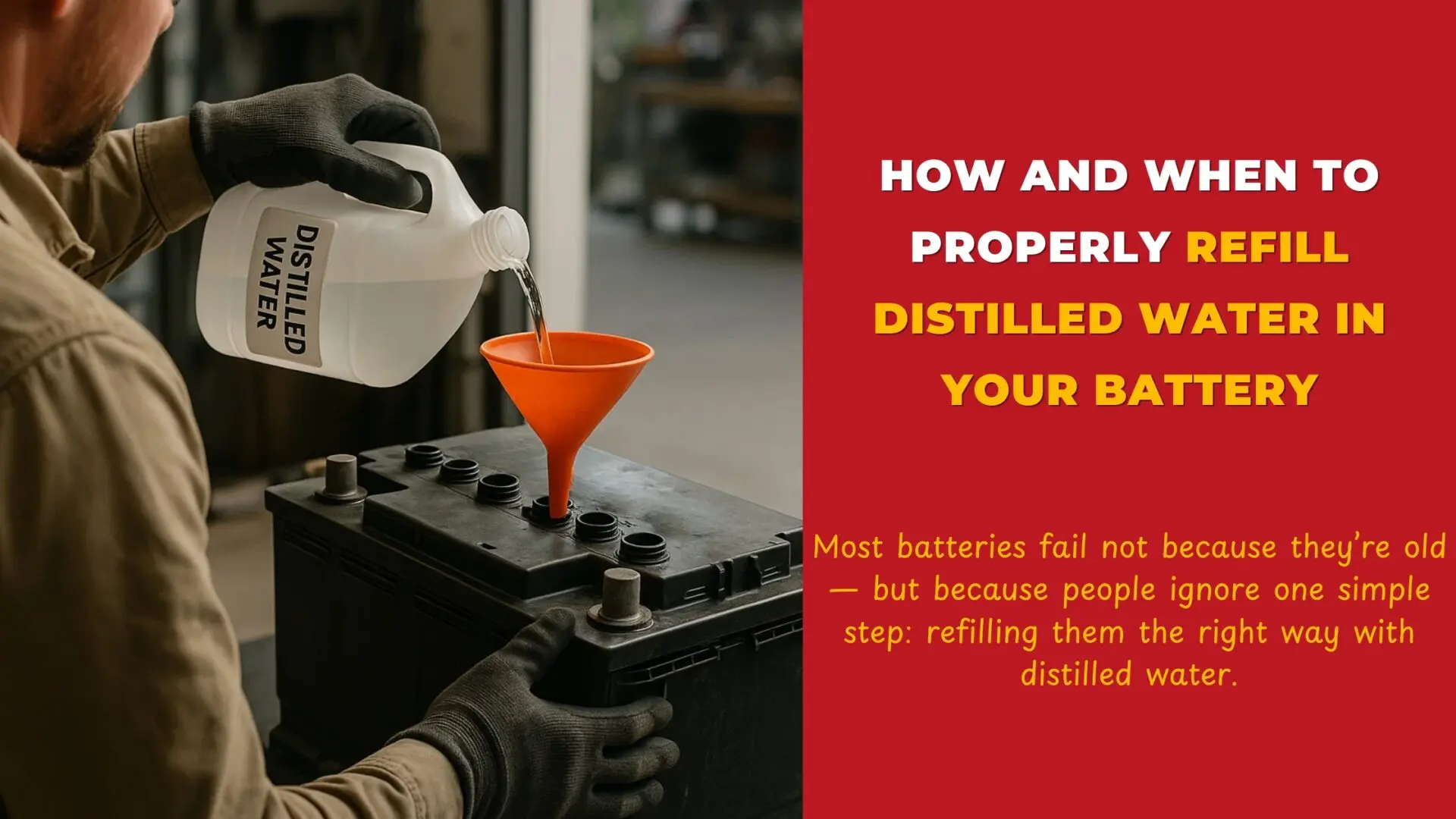
Lead-acid batteries are commonly used in inverters, cars, and backup power systems because they are reliable and cost-effective. However, these batteries need proper care to function well and last longer. One of the most important parts of battery maintenance is refilling distilled water when the level becomes low.
Distilled water is not just ordinary water—it is purified and free from minerals. Adding the right amount at the right time helps the battery maintain chemical balance and deliver consistent backup or starting power. If the water level is ignored or refilled incorrectly, it can cause reduced performance, faster aging, and even permanent damage to the battery.
This blog explains why distilled water matters, when to refill it, and how to do it safely, even if you’re checking a battery for the first time.
Why Distilled Water Matters for Batteries
To understand why distilled water is important, let’s look at how a lead-acid battery works.
Inside the battery, there are plates submerged in a liquid called electrolyte. This electrolyte is a mixture of sulfuric acid and water. During charging and discharging, a chemical reaction takes place between the plates and the electrolyte, allowing the battery to store and release electricity.
Over time and usage:
- Water evaporates during charging cycles
- The electrolyte level drops
- Battery plates may become exposed
If the plates are not fully covered with liquid, they begin to corrode and weaken. This leads to poor backup performance and shorter battery life.
Why not use normal water?
Tap water and even filtered/RO water contain minerals and impurities. When added to the battery, these minerals react with the internal components, causing scale, corrosion, and reduced efficiency.
Distilled water is pure, meaning it does not introduce extra minerals. It helps maintain:
- Proper electrolyte balance
- Longer battery lifespan
- Stable charging and discharging performance
- Better overall power backup
So, distilled water is not simply a recommendation—it is essential for healthy battery operation.
When to Refill Distilled Water in Your Battery
Knowing when to refill distilled water is just as important as knowing how.
Signs the Water Level May Be Low
- The battery backup time has reduced noticeably
- The inverter switches to backup faster than usual
- You notice heat or smell during charging
- The battery plates appear exposed when you open the caps
- The electrolyte level is below the recommended marking
If the plates are visible above the liquid, it means the water level is too low and needs immediate refilling to avoid damage.
How Often Should You Check the Battery?
As a general guide:
- Check every 2 to 3 months in normal conditions
- Check more frequently in summer, because heat causes faster evaporation
- If there are long power cuts in your area, check monthly, as heavy usage speeds up water loss
- If the battery is new, monitor water levels closely during the first few months to understand its usage pattern
Important Tip
Do not wait until the battery is almost dry. Allowing the plates to remain uncovered for long will permanently worsen performance, even after refilling.
How to Refill Distilled Water Properly (Step-By-Step Guide)
Refilling distilled water is simple when done correctly. Follow this safe and easy procedure:
Step 1: Turn Off Power
Switch off the inverter and unplug it from the power source. If it’s a vehicle battery, turn off the engine.
Step 2: Disconnect the Battery (If Needed)
For inverters, disconnect the battery terminals carefully.
Always remove the negative terminal first, then the positive.
Step 3: Locate and Open the Vent Caps
Lead-acid batteries have small caps on top. These may be individual caps or a single strip cap.
Open them gently without forcing.
Step 4: Check the Electrolyte Level
Inside, you will see marks such as:
- LOWER LEVEL
- UPPER LEVEL
If the liquid is below the upper mark, it needs refilling.
Step 5: Add Distilled Water Slowly
Use only distilled water for battery maintenance.
Pour slowly using a funnel to avoid spills.
Fill until the liquid level reaches the upper mark—not more.
Step 6: Avoid Overfilling
Excess water can cause electrolyte to overflow during charging, leading to leakage and corrosion around the battery.
Step 7: Secure the Caps and Reconnect
Close the caps tightly.
Reconnect battery cables—positive first, then negative.
Turn the inverter or vehicle back on.
Safety Tips
- Wear gloves to protect your hands
- Keep the battery in a well-ventilated space
- Do not smoke or use flames nearby
- If electrolyte spills, clean immediately with a dry cloth
This careful and slow approach ensures your battery is refilled safely and effectively.
Common Mistakes to Avoid
Even experienced users sometimes unknowingly damage their battery. Here are common mistakes to avoid:
1. Using Tap Water Instead of Distilled Water
Tap water contains minerals that react with battery plates, reducing efficiency and lifespan.
2. Overfilling the Battery
Overflow leads to acid leakage and corrosion around terminals and battery casing.
3. Forgetting Regular Water Level Checks
Irregular checking can cause plate exposure and permanent damage.
4. Refilling While the Battery Is Charging
Adding water during charging can cause bubbling and splashing, increasing the risk of acid exposure.
5. Ignoring Corroded Terminals
White or green powder around terminals indicates corrosion—clean it gently with a brush to maintain strong electrical contact.
Avoiding these mistakes helps your battery run smoothly and last longer.
Conclusion
Keeping your battery healthy is simple when you follow the right steps. Regularly checking the water level and refilling only with distilled water ensures steady performance, reliable backup, and longer battery life. A few minutes of maintenance every few months can prevent costly replacements later.
If you want your inverter or vehicle battery to work efficiently throughout the year, make proper water refilling a routine part of your battery care.
Make it a habit—regularly check your battery’s water level and keep it refilled with distilled water for longer, smoother performance. Vaibhav Enterprises offers a complete range of trusted inverter and car batteries that ensure reliable power and extended battery life. For product details or expert guidance, contact us for assistance.
Also Read: 8 Common Myths and Facts About Lead Acid Batteries