
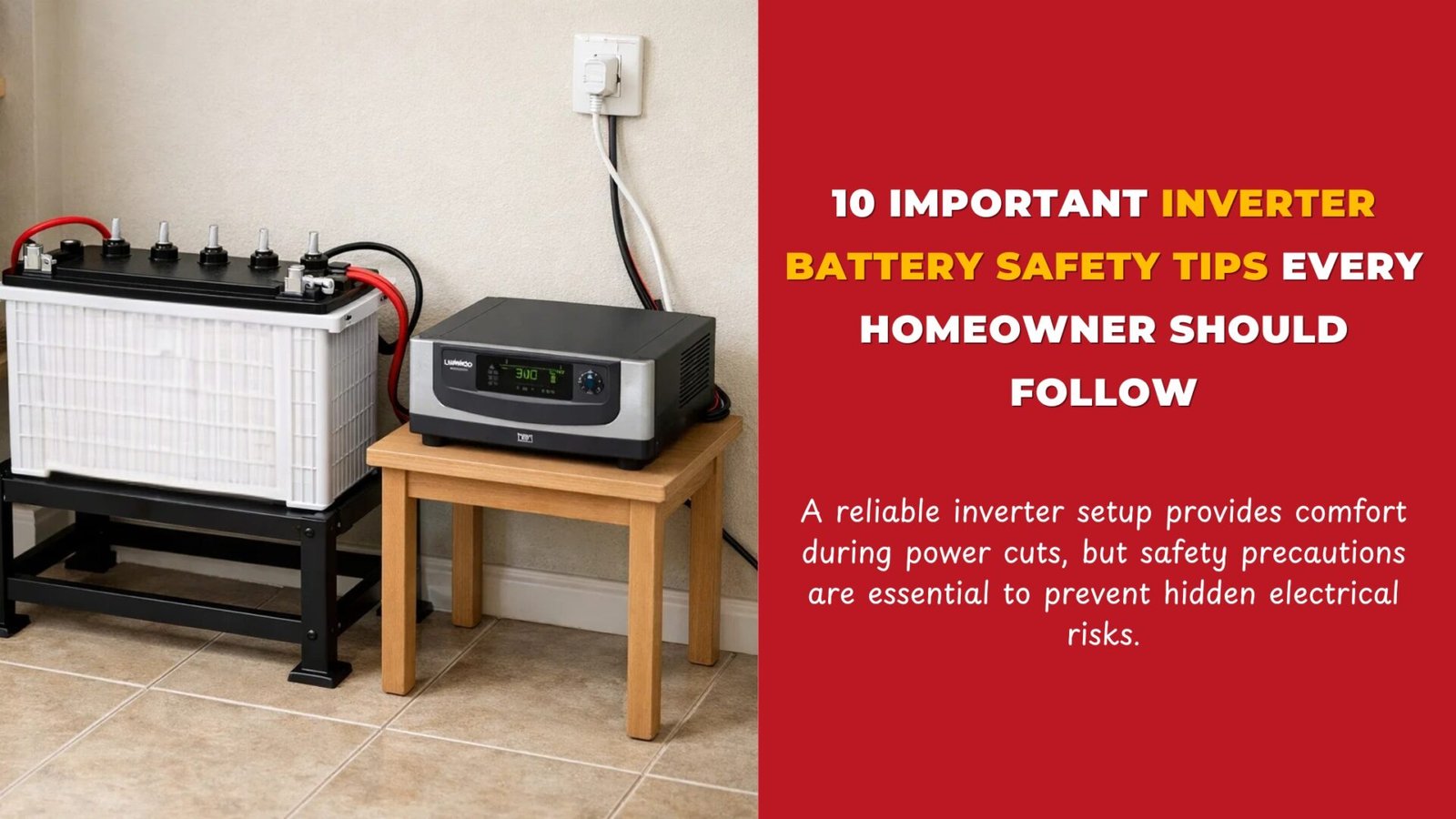
Power backup systems have become a common part of modern homes, especially in areas where electricity interruptions occur frequently. Inverter systems provide reliable backup during power cuts, helping households continue using essential appliances such as lights, fans, internet routers, and small electronic devices. However, while inverter systems are convenient, they also involve electrical components and batteries that must be handled carefully.
Many homeowners focus on performance and backup time but often overlook the importance of safety. Batteries store electrical energy and can produce heat and gases during operation. Without proper precautions, this may create risks such as overheating, gas buildup, or electrical hazards.
Following proper Inverter Battery Safety Tips helps ensure safe usage of the power backup system. By understanding and applying basic safety practices, homeowners can prevent accidents, protect their equipment, and maintain a safer environment inside their homes.
Why Inverter Battery Safety Is Important at Home
Inverter batteries are designed to provide reliable backup power, but they also require careful handling because they store electrical energy and involve chemical processes. If safety precautions are ignored, certain risks may arise.
Some common risks associated with inverter batteries include:
- Gas buildup during battery charging
- Electrical hazards from loose connections
- Overheating caused by excessive load
- Damage due to improper installation
During the charging process, batteries can release small amounts of hydrogen gas. Without proper inverter battery ventilation safety, this gas may accumulate in closed spaces and create a potential hazard.
Additionally, incorrect wiring or poorly installed batteries can increase the risk of electrical faults. For this reason, homeowners should follow basic inverter battery safety rules to ensure safe usage and prevent unnecessary risks.
Maintaining proper inverter battery safety at home not only protects people but also improves the reliability of the power backup system.
10 Important Inverter Battery Safety Tips Every Homeowner Should Follow
Following practical safety measures can significantly reduce risks associated with inverter batteries. Below are some essential Inverter Battery Safety Tips that every homeowner should follow.
1. Install the Inverter Battery in a Well-Ventilated Area
Proper airflow is extremely important for battery safety. During charging, batteries may release gases that need to disperse into the surrounding air.
Placing the battery in a closed cabinet or poorly ventilated area can cause gas buildup. Good inverter battery ventilation safety ensures that gases do not accumulate and reduces the risk of hazardous conditions.
2. Keep the Battery Away from Direct Heat Sources
High temperatures can negatively affect battery performance and increase the chances of overheating.
Avoid placing the battery near:
- Kitchen appliances
- Direct sunlight
- Heating equipment
Maintaining a moderate temperature around the battery supports inverter battery overheating prevention and improves overall system safety.
3. Avoid Overloading the Inverter
Every inverter system has a defined capacity. Connecting too many appliances at once can overload the inverter and cause excessive heat generation.
Overloading can result in:
- System shutdowns
- Battery strain
- Electrical damage
Following recommended usage limits is an important part of inverter battery safety precautions.
4. Keep the Battery Out of Reach of Children
Inverter batteries contain electrical components and chemical elements that can be dangerous if mishandled.
Children may accidentally touch battery terminals or play with wires, which could result in electrical shocks.
To ensure inverter battery safety at home, install the battery in a location that is not easily accessible to children or pets.
5. Check for Loose or Damaged Connections
Loose wiring can cause sparks, heat buildup, and electrical hazards. Over time, vibration or improper installation may cause connections to weaken.
Homeowners should occasionally check for:
- Loose battery terminals
- Damaged cables
- Burn marks on wires
Addressing such issues promptly improves electrical safety and supports proper inverter battery maintenance safety.
6. Use Proper Battery Stands or Platforms
The battery should always be placed on a stable and insulated platform rather than directly on the floor.
Using a proper stand offers several safety benefits:
- Prevents moisture exposure
- Reduces the risk of accidental tipping
- Improves ventilation around the battery
This step is an important part of inverter battery installation safety.
7. Avoid Sparks or Open Flames Near Batteries
During charging, batteries may release small amounts of hydrogen gas, which is highly flammable.
Even a small spark near the battery could cause problems if gas accumulates in the area.
To reduce inverter battery gas risk, avoid activities such as:
- Smoking near the battery
- Using open flames nearby
- Creating sparks during electrical work
Keeping the battery area clear of ignition sources is an essential safety measure.
8. Regularly Inspect the Battery for Leakage or Damage
Physical damage or chemical leakage from a battery can indicate a serious problem.
Homeowners should occasionally check for:
- Cracks in the battery casing
- Acid leakage
- Swelling or deformation
Early identification of these issues helps prevent more serious inverter battery problems and improves safety.
9. Follow Manufacturer Safety Instructions
Each inverter and battery model is designed with specific safety guidelines provided by the manufacturer.
These instructions often include:
- Recommended installation methods
- Electrical safety requirements
- Safe operating conditions
Following these official inverter battery safety rules ensures that the system functions properly and safely.
10. Schedule Professional Battery Checkups When Needed
While homeowners can observe basic safety conditions, professional technicians are trained to identify deeper technical risks.
Periodic professional inspections help ensure:
- Proper wiring conditions
- Safe charging operation
- Early detection of electrical faults
Professional checkups support overall inverter battery safety precautions and help prevent unexpected issues.
Common Safety Mistakes Homeowners Should Avoid
Even well-installed inverter systems can become unsafe if certain mistakes are made. Being aware of these risks helps homeowners avoid potentially dangerous situations.
Placing Batteries in Closed Cabinets
Many people install inverter batteries inside cupboards or sealed cabinets to hide them from view. However, this restricts airflow and increases the risk of gas accumulation.
Proper inverter battery ventilation safety requires open space around the battery.
Ignoring Unusual Smells or Sounds
A strong chemical smell or unusual noise from the inverter system may indicate overheating or internal battery issues.
Ignoring these warning signs may lead to serious safety problems.
Using Poor Quality Wiring
Low-quality wires or incorrect connections can cause electrical faults or overheating.
Proper inverter battery installation safety requires strong, well-insulated cables.
Installing Batteries in High-Temperature Areas
Excessive heat can reduce battery efficiency and increase the risk of damage.
Batteries should always be placed in cool, shaded, and ventilated locations.
Conclusion
Inverter systems play an important role in providing reliable electricity during power cuts, but safe operation is just as important as performance. Since inverter batteries store electrical energy and involve chemical processes, they require careful handling and awareness.
Following the right Inverter Battery Safety Tips can significantly reduce risks such as electrical hazards, overheating, or gas buildup. Simple precautions like proper ventilation, avoiding excessive heat, checking electrical connections, and keeping batteries away from ignition sources can help maintain a safe environment at home.
Practicing proper inverter battery safety at home not only protects family members but also helps improve the reliability and longevity of the backup system. By staying aware of basic safety rules and responding quickly to warning signs, homeowners can ensure their inverter systems operate safely and efficiently for many years.
Need Reliable Batteries and Inverter Solutions?
While following the right inverter battery safety tips helps maintain a safe power backup system, choosing high-quality batteries and inverters is equally important. Vaibhav Enterprises offers reliable power backup solutions with a wide range of trusted products suitable for homes, vehicles, and businesses.
Customers can explore dependable options such as Amaron batteries, Trontek batteries, Luminous inverters, Microtek inverters, and other advanced power backup solutions designed to provide strong performance, durability, and consistent electricity during power cuts.
With proper guidance, installation support, and quality products, Vaibhav Enterprises helps customers choose the right battery and inverter solutions according to their power needs.
For more information about batteries, inverters, or power backup solutions, feel free to contact us for professional assistance and reliable service.