
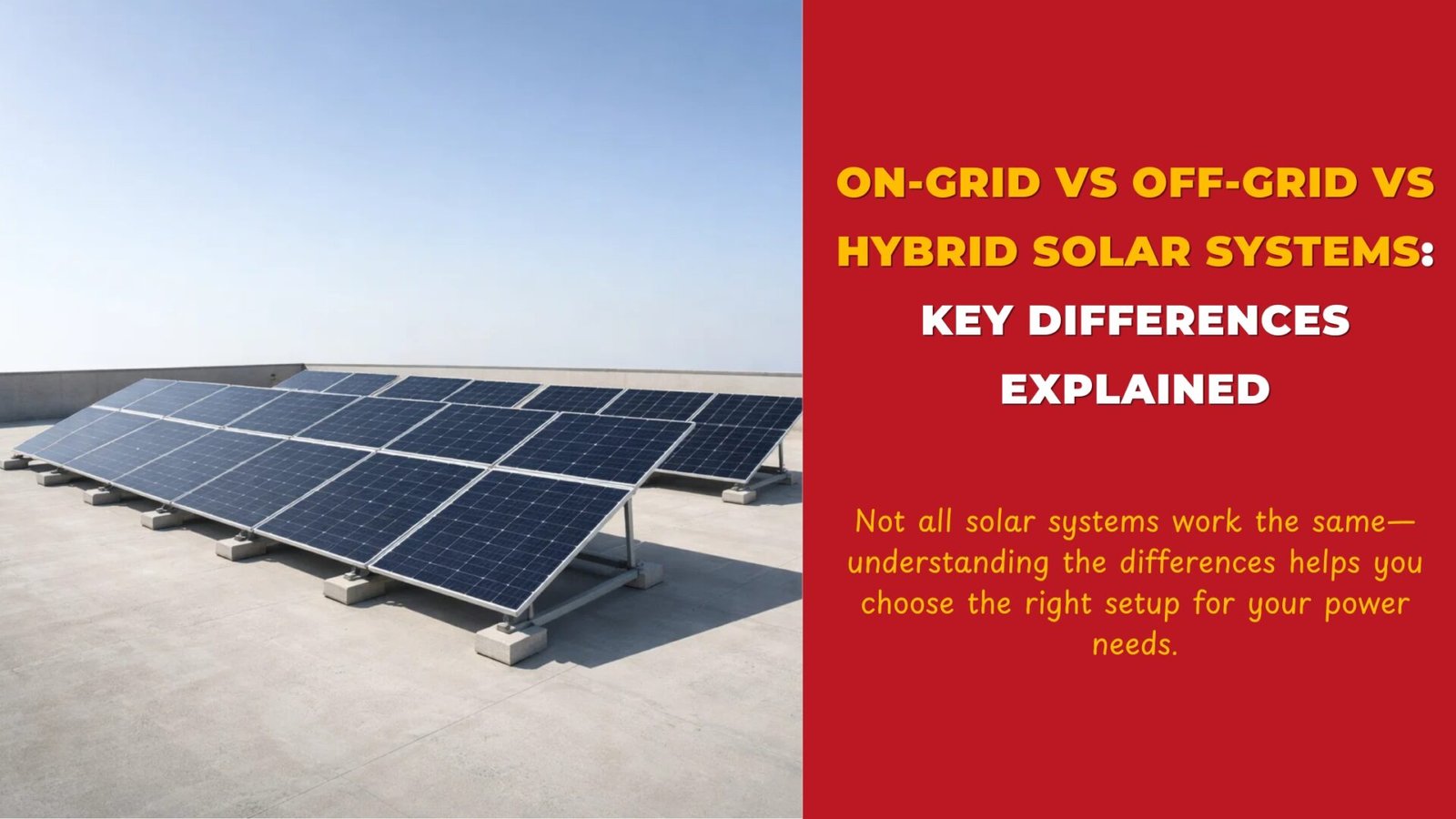
Solar energy adoption has grown rapidly in recent years as homeowners and small businesses look for reliable ways to reduce electricity bills and become less dependent on conventional power sources. With rising energy costs and increasing awareness about sustainability, solar power has moved from being an “alternative option” to a practical long-term solution.
However, one common challenge for beginners is understanding the different types of solar systems available. Many people hear terms like on-grid, off-grid, and hybrid solar systems but are unsure how they work or which one is right for their home or business. The confusion often leads to wrong decisions, either overspending or choosing a system that does not meet actual power needs.
This guide explains on-grid vs off-grid vs hybrid solar systems in simple language. You will learn how each system works, their advantages and limitations, and how to choose the most suitable solar system for your situation—without technical jargon or sales pressure.
1️⃣ What Is an On-Grid Solar System?
An on-grid solar system is directly connected to the local electricity grid. It generates power using solar panels during the daytime and supplies electricity to your home or business. If your system produces more power than you use, the extra electricity is sent back to the grid.
At night or during cloudy weather, when solar panels are not producing enough energy, electricity is automatically drawn from the grid. This smooth switching happens through a solar inverter, which manages power flow efficiently.
Key Advantages
- Lower initial cost because no batteries are required
- Net metering benefits, allowing you to reduce electricity bills
- High efficiency with minimal energy loss
- Simple design and easy maintenance
Limitations
- No power backup during grid power cuts
- Fully dependent on grid availability
Best Use Cases
- Homes in cities with reliable electricity supply
- Users focused mainly on reducing monthly electricity bills
- Properties where net metering is available
2️⃣ What Is an Off-Grid Solar System?
An off-grid solar system operates completely independently from the electricity grid. It generates solar power during the day and stores unused energy in batteries for use at night or during low sunlight periods.
Because it does not rely on the grid, this system requires solar batteries to ensure continuous power. A charge controller regulates battery charging and prevents damage, while an inverter converts stored energy into usable electricity.
Key Advantages
- Complete power independence
- Reliable backup during outages
- Ideal for areas with no grid connection
Limitations
- Higher upfront cost due to batteries
- Battery replacement and maintenance required
- Careful energy planning is needed
Best Use Cases
- Remote locations and rural areas
- Sites with frequent or long power cuts
- Users who need uninterrupted electricity
3️⃣ What Is a Hybrid Solar System?
A hybrid solar system combines the benefits of both on-grid and off-grid systems. It is connected to the grid but also includes battery storage. During the day, solar panels power your appliances and charge the batteries. Excess energy can be sent to the grid.
During power cuts, the system automatically switches to battery backup, ensuring continuous electricity supply. This makes hybrid systems highly flexible and reliable.
Key Advantages
- Power backup + bill savings
- Flexible energy usage
- Reduced dependence on the grid
Limitations
- Higher initial investment
- More complex system design
Best Use Cases
- Urban homes with occasional power cuts
- Small businesses needing backup without full independence
- Users planning future energy expansion
4️⃣ Key Differences Between On-Grid, Off-Grid, and Hybrid Solar Systems
| Feature | On-Grid Solar System | Off-Grid Solar System | Hybrid Solar System |
| Grid Connection | Yes | No | Yes |
| Battery Usage | No | Yes | Yes |
| Power Backup | No | Yes | Yes |
| Initial Cost | Low | High | Medium–High |
| Maintenance | Low | Medium | Medium |
| Ideal Users | City homes | Remote areas | Mixed usage |
This solar system comparison highlights how each option serves different needs. There is no single “best” system—only the most suitable one for your situation.
5️⃣ Which Solar System Should You Choose?
Choosing the right solar system for home or business depends on practical factors:
Power Cut Frequency
- Rare power cuts → On-grid solar system
- Frequent outages → Off-grid or hybrid solar system
Electricity Bills
- High bills, stable grid → On-grid
- High bills + backup need → Hybrid
Budget
- Limited budget → On-grid
- Flexible budget → Hybrid
- Remote setup → Off-grid
Location
- Urban areas → On-grid or hybrid
- Rural or isolated locations → Off-grid
Evaluating these points honestly helps avoid unnecessary expenses and disappointment later.
6️⃣ Common Mistakes People Make While Choosing a Solar System
Many users make avoidable mistakes when comparing solar options:
Choosing only based on cost
Cheaper systems may fail to meet long-term needs.
Ignoring power cut patterns
Backup requirements are often underestimated.
Not planning for future usage
Additional appliances or expansion may require system upgrades.
Understanding your energy habits before installation leads to better results and long-term satisfaction.
Conclusion
Understanding the difference between solar systems is essential before investing in solar energy. On-grid systems are excellent for reducing electricity bills in areas with stable grid supply. Off-grid systems provide complete independence and reliable power in remote or outage-prone locations. Hybrid systems balance savings with backup, offering flexibility and security.
There is no universal “best” solar solution. The right choice depends on your electricity usage, location, budget, and power reliability needs. By evaluating these factors carefully, you can choose a solar setup that delivers both financial and practical benefits over time.
Before making a decision, take time to assess your energy requirements today and in the future. A well-informed choice ensures your solar system works efficiently, reliably, and sustainably for years to come.
If you are planning to install a solar system, getting the right guidance makes a big difference. Vaibhav Enterprises helps homeowners and businesses understand their actual power needs and choose a solar panel setup that fits their usage and budget. With proper system selection and reliable installation support, you can move towards long-term savings and dependable solar energy with confidence.
For personalized guidance or to discuss your solar requirements in detail, feel free to contact us and take the next step toward a well-planned solar installation.