
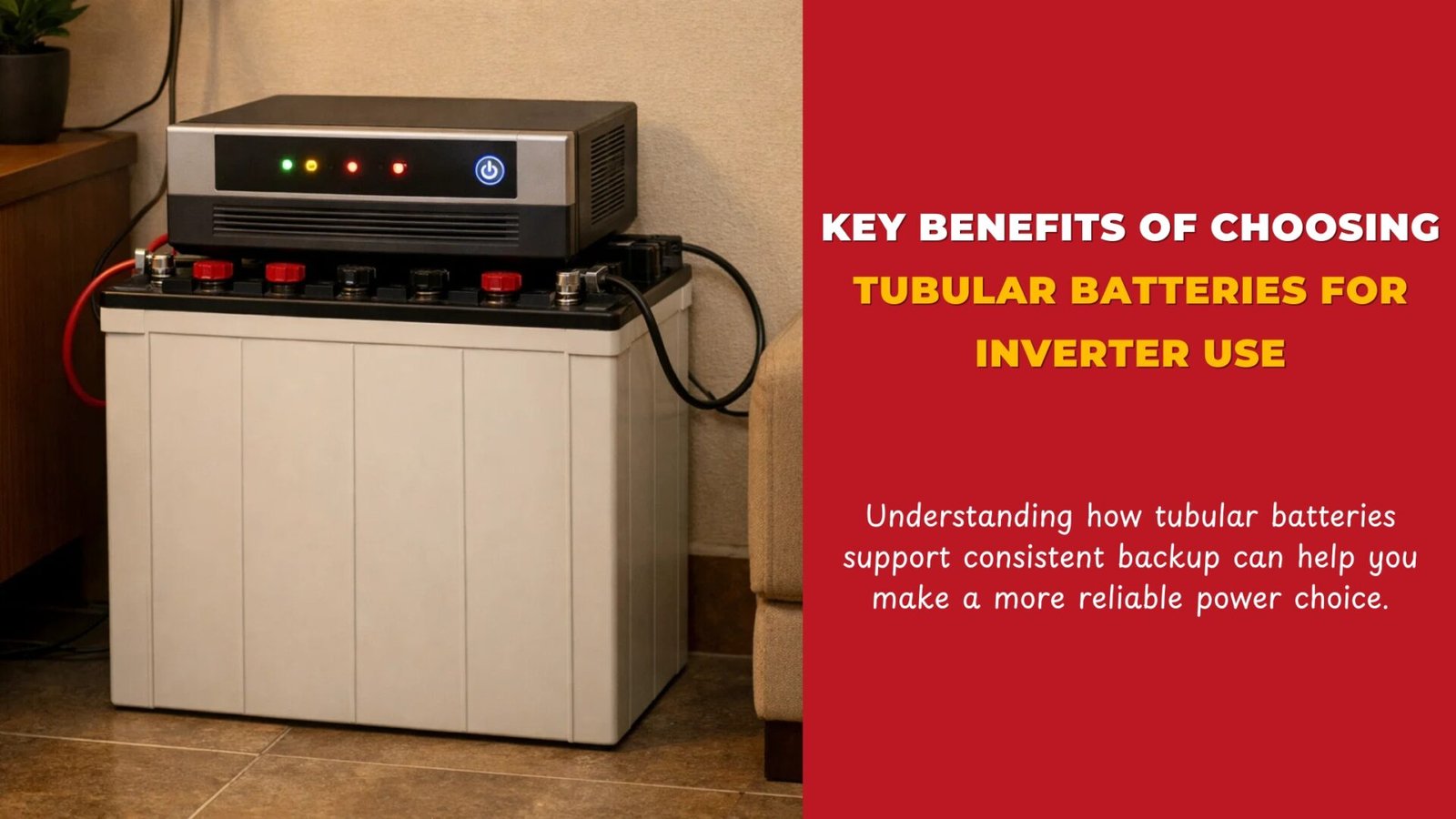
In many Indian homes and small offices, an inverter is no longer a luxury. It has become a basic support system that helps daily life continue during power cuts. Lights, fans, Wi-Fi routers, and sometimes work-from-home setups all depend on how well the inverter performs.
While people often focus on inverter capacity or brand, the battery connected to the system plays an equally important role. Battery choice directly affects backup duration, reliability, and how the system behaves over time. This is why tubular batteries are frequently discussed when people talk about inverter performance.
Understanding why tubular batteries are chosen—without hype or exaggerated claims—helps users make better, more realistic decisions.
Understanding Tubular Batteries
A tubular battery is a type of lead-acid battery designed with a different internal structure compared to more basic flat-plate batteries. Instead of flat grids, the positive plates are built in a tubular shape that holds the active material more securely.
In simple terms, this internal design helps the battery handle repeated charging and discharging more steadily. That is why a tubular battery for inverter use is common in households where the inverter is used regularly.
Tubular batteries are not special because of branding or promises. They are used because their structure suits the working pattern of inverters better than many general-purpose batteries.
Why Battery Design Matters in Inverter Systems
An inverter battery does not work in a smooth, predictable way. Its usage pattern is irregular and depends on local power conditions.
In inverter systems:
- Batteries go through frequent charge and discharge cycles
- Power cuts may last minutes or several hours
- Load keeps changing depending on appliances in use
This puts different stress on the battery compared to automotive or standby applications. Battery design determines how well it tolerates this stress.
The internal structure of a battery influences how heat builds up, how material wears out, and how consistently energy is delivered. This is where design becomes more important than surface specifications.
Key Benefits of Using Tubular Batteries for Inverter Use
Better Handling of Deep Discharge Cycles
During longer power cuts, inverter batteries may discharge to lower levels before recharging begins. Tubular batteries are designed to handle deeper discharge cycles more steadily than many general inverter batteries.
This does not mean they should be fully drained regularly, but their structure tolerates deeper usage patterns with less internal damage over time.
Stability During Longer Power Cuts
In areas with extended or unpredictable power cuts, battery stability becomes important. Tubular batteries tend to provide more consistent output during longer backup periods.
This stability helps the inverter system function smoothly without sudden voltage drops that can affect connected appliances.
Consistent Performance in Regular Inverter Use
For homes that rely on inverters daily, consistency matters more than peak performance. Tubular batteries usually show steadier behaviour across repeated cycles, making them suitable for regular use rather than occasional backup only.
This consistency is one reason people often associate tubular inverter battery benefits with reliability rather than raw power.
Longer Usable Life in Proper Conditions
When used under suitable load and charging conditions, tubular batteries often maintain their performance for a longer usable period. This does not mean they last forever, but their internal design slows down wear when usage is frequent.
Battery lifespan still depends heavily on how the inverter is used, not just on battery type.
Better Suitability for Frequent Backup Usage
Inverter batteries that are rarely used behave differently from those that support daily power cuts. Tubular batteries are commonly selected for frequent backup usage because their design matches this demand pattern more closely.
This makes them practical for regions where power reliability fluctuates.
Tubular Batteries and General Inverter Batteries in Context
There are different inverter battery types, each meant for specific usage patterns. Some are designed for light, occasional backup, while others are built for repeated cycling.
Tubular batteries are often preferred when:
- Backup is frequent rather than occasional
- Power cuts vary in duration
- The inverter is a regular part of daily life
This does not mean other battery types are unsuitable. The choice depends on how the inverter is actually used, not on assumptions or marketing claims.
Situations Where Tubular Batteries Make More Sense
In real-life settings, certain situations naturally align better with tubular batteries.
Homes With Frequent Power Cuts
When outages are a regular part of daily life, batteries face more stress. Tubular batteries tend to cope better with this repeated demand.
Small Offices Needing Stable Backup
Work-from-home setups or small offices rely on steady power rather than long backup hours. Battery stability and consistency become more important than just capacity.
Regular Inverter Users
If the inverter is switched on almost daily, battery design becomes a deciding factor. Tubular batteries are often chosen in such cases because of their cycling tolerance.
It is important to note that they are not the only solution, but they fit these situations well.
Common Misunderstandings About Tubular Batteries
Tubular Does Not Mean Zero Maintenance
Tubular batteries still require proper care. Water levels, charging conditions, and usage habits all affect performance. The design helps, but it does not eliminate responsibility.
Tubular Does Not Guarantee Unlimited Backup
Backup time depends on battery capacity, connected load, and power usage. Tubular batteries do not create extra energy—they only manage stored energy more reliably.
Battery Life Depends on Usage, Not Just Type
Even the best-designed battery will degrade faster if it is overloaded, undercharged, or misused. Inverter battery performance is always a result of combined factors.
Understanding these points helps avoid unrealistic expectations.
Things That Affect Tubular Battery Performance
Battery type is only one part of the system. Actual performance depends on several real-world factors.
Load Connected to the Inverter
Higher load drains the battery faster and increases internal stress. Continuous heavy load shortens usable life regardless of battery design.
Charging Quality
Inverters that undercharge or overcharge the battery affect long-term health. Charging behaviour plays a major role in battery reliability.
Power Cut Frequency
Frequent switching between charge and discharge cycles increases wear. Tubular batteries handle this better, but the stress still exists.
Usage Habits
How often the inverter is used, how deeply the battery is discharged, and how consistently it is recharged all influence outcomes.
These factors explain why two homes using the same battery type may have very different experiences.
Conclusion
Tubular batteries are commonly chosen for inverter systems because their internal design aligns well with the demands of regular power backup. They handle repeated charging cycles more steadily, provide consistent output during longer outages, and support reliable inverter operation when used correctly.
However, no battery type works independently of usage conditions. Inverter power backup battery performance always depends on load, charging quality, and real-life usage patterns.
Understanding why tubular batteries are preferred—without assuming they are perfect or compulsory—allows users to make informed, realistic decisions. Awareness, not hype, is what prevents disappointment and ensures dependable power support over time.
If you are unsure which inverter battery suits your usage pattern, getting the right guidance can prevent long-term performance issues. Vaibhav Enterprises offers a range of reliable inverter batteries along with practical advice to help you choose the right option based on your actual backup needs. For product details or assistance, you can connect with us for reliable guidance tailored to your backup needs.